
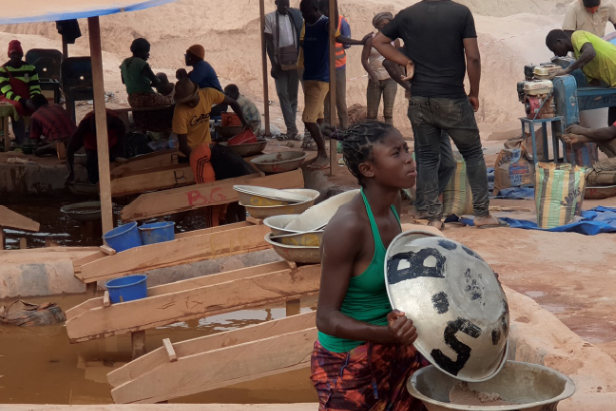
In Eastern Cameroon, within the Congo forest zone often described as one of Africa’s “green lungs”, communities are taking action to restore land degraded by artisanal mining. Building on research into the environmental damage in Bélabo and Batouri, the ACP-EU Development Minerals Programme is supporting a community-led approach that combines practical training, ecological restoration and alternative livelihood opportunities.
When Mining Leaves Its Mark
In Cameroon’s East Region, within the Congo forest zone that forms part of the world’s second-largest tropical rainforest, Bélabo and Batouri are two areas where mining and other human activities have left a visible mark on the landscape. In Bélabo, sand mining along the Sanaga River has contributed to the loss of vegetation along its banks. In Batouri, gold mining and other human activities have contributed to much more extensive forest loss and land degradation. Both locations were selected for the Green Mining initiative because of the environmental impacts associated with mining.
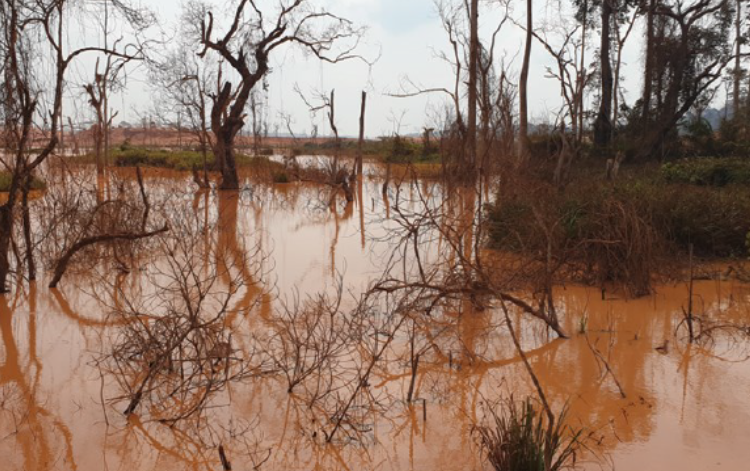
These pressures have intensified over time. Expanding agriculture, urbanisation and population growth have all put increasing pressure on the environment, but mining has been a major driver of degradation in these areas. Mining activities have contributed to the loss of forests and vegetation, soil contamination and open mining pits being left behind.
In some mining areas, vegetation that once covered the land has disappeared, soils have been contaminated and open pits remain where mining has taken place.
In Bélabo, nearly 62 hectares of vegetation along the Sanaga River banks have been lost, leaving stretches of the riverbank degraded and in need of restoration. In Batouri, the scale and intensity of degradation are much greater: more than 8,000 hectares of forest and land have been affected over the last three decades. The difference reflects the much greater intensity of degradation in Batouri, where gold mining is a major activity, compared with sand mining in Bélabo.
Restoring land after mining can be difficult. Large mining companies can be held responsible for rehabilitating the areas they use. In artisanal and small-scale mining, however, responsibility is often spread across many individual miners and small operators. With no single actor clearly responsible, damaged land is usually left unrestored.
Communities Lead the Way
In Cameroon, however, a different story is beginning to unfold.
Instead of accepting environmental degradation as an unavoidable consequence of mining, communities in Bélabo and Batouri are working together to restore these landscapes and create new opportunities for the future.
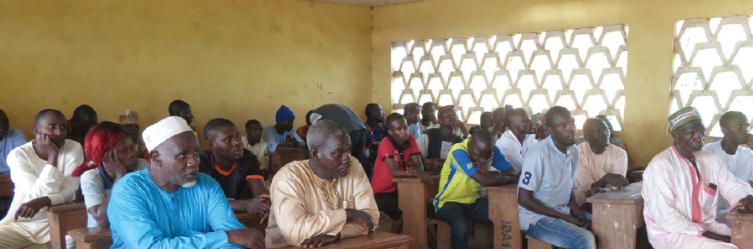
The Green Mining Cameroon initiative grew out of a request from Cameroon’s Ministry of Mines to UNDP Cameroon for support in addressing the degradation of mining sites.
In 2023, the Ministry of Mines and UNDP established the Green Mining Task Force, bringing together key stakeholders to examine the environmental impacts of mining and identify ways to address them. The Green Mining Task Force’s work has been supported and coordinated by the ACP-EU Development Minerals Programme. Specifically, the Task Force carried out studies that documented the degradation of ecosystems in Cameroon’s East Region, including vegetation loss, soil contamination and abandoned mining pits. These findings helped identify where restoration was needed and laid the groundwork for action with local communities.
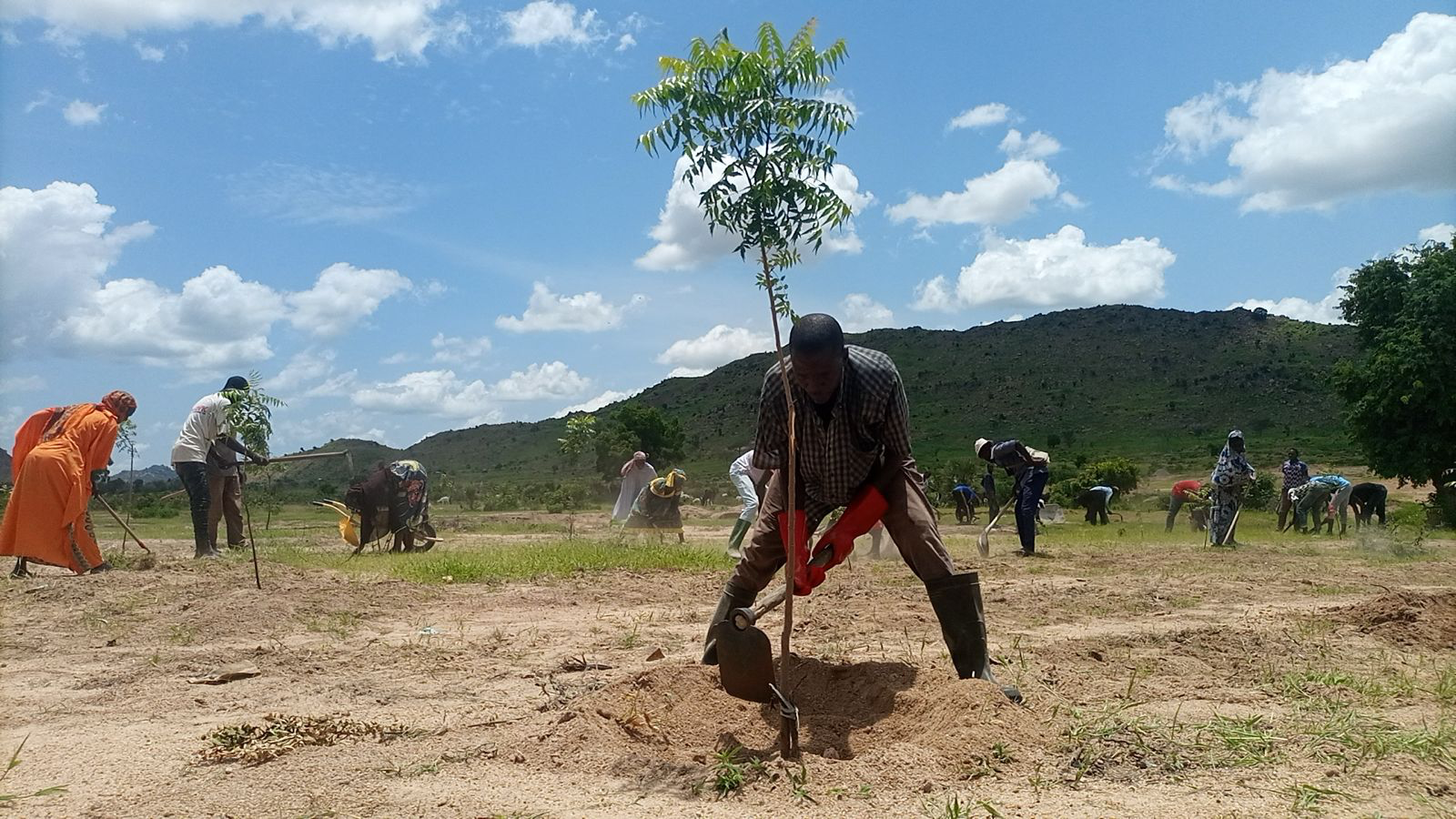
Building on the studies, the ACP-EU Development Minerals Programme is supporting communities in Bélabo and Batouri to restore land degraded by artisanal mining. Working with local councils, universities and civil society organisations, the Programme has helped organise communities and provided practical training in nursery management, seedling production and tree planting – in short, environmental rehabilitation of areas degraded by mining.
The restoration follows a practical sequence. After identifying degraded areas through research and mapping, communities are engaged in planning the restoration work. Plant species are then selected for both their environmental and economic benefits. These include garcinia kola, ricinodendron heudelotii, voacanga africana and bamboo, which can provide fruits, seeds and other products for communities to earn incomes from, while helping to stabilise soils and restore biodiversity.
Community members grow the selected plants in local nurseries, where more than 3,000 seedlings have already been produced on a 200-square-metre area. The degraded mining sites are then prepared for restoration before the seedlings are planted. Women, young people, farmers, miners and local associations are involved throughout the process, while a community monitoring committee helps track the restoration work.
“Restoring mining-degraded land in these areas is important because it brings hope of a brighter future for the next generation,” says Charlot Moussa, Country Coordinator for Cameroon with the ACP-EU Development Minerals Programme. “Involving local communities directly in the restoration work also raises awareness of land degradation and helps people see what they can gain from restoring the land.”
What makes this approach different is the way research and practical training are combined with community organisation and government involvement. Communities, local authorities, universities and development partners are working together, while regular monitoring and reporting help track progress and strengthen accountability. In a sector where rehabilitation is often difficult because responsibility is spread across many small-scale actors, this collective approach offers a different way forward.
Building a Greener Future
The ambition is already growing.
In Batouri, local authorities have committed to restoring 178 hectares of land – roughly the size of 250 football fields – and transforming the area into an eco-tourism park. In Bélabo, efforts continue to focus on restoring and protecting the banks of the Sanaga River for future generations.
The experience in Bélabo and Batouri has shown a successful community-led approach to restoring land degraded by artisanal and small-scale mining. By involving miners and local communities directly in the restoration process, alongside local authorities, researchers and other partners, the initiative is making rehabilitation a shared responsibility rather than something left to a single actor.
The restoration work is still ongoing, but the approach in Cameroon could offer lessons for other countries facing similar challenges, particularly its neighbours across the Congo forest region. If successful, it could provide a practical model for involving communities and miners themselves in restoring land affected by artisanal and small-scale mining.