
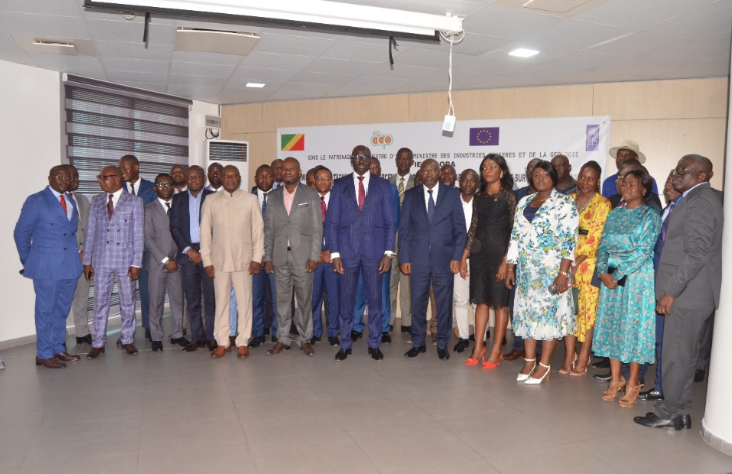
Training on Formalization, Environment, Health and Safety
Brazzaville. Republic of Congo
The Programme conducted training on value-addition, eco-construction and sustainable artisanal mining, helping strengthen the skills of artisanal and small-scale miners, particularly those working with earth materials such as laterite and clay.
The training focused on value addition, eco-construction techniques, formalization of enterprises, as well as environmental protection, health, and safety throughout the mining cycle.
The training was organized by the ACP-EU Development Minerals Programme in partnership with the Ministry of Mines. It brought together 52 people, including miners and ASM organisations, mineral sector stakeholders.
Participants gained practical skills to produce suitable local building materials, reduce environmental impacts, and better manage health and safety risks. The sessions combined technical presentations, practical exercises, and interactive discussions, helping participants apply safer, more sustainable, and better-organized mining practices.

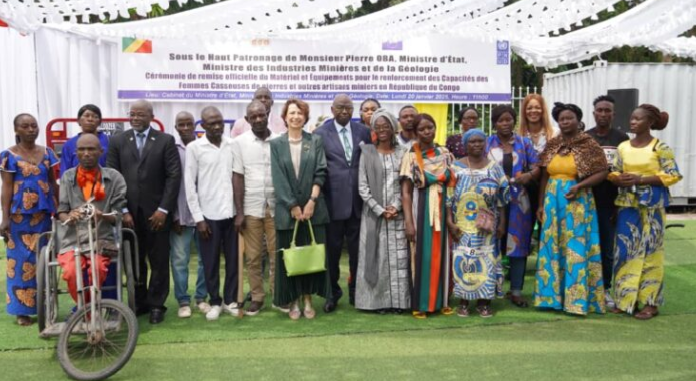
Tools and Equipment for Better Safety and Productivity of Women Artisanal Miners
Brazzaville, Republic of Congo
Small grants were provided to targeted groups such as women stone crushers, artisanal miners working in the Kombé quarries, and potters living with disabilities. More than 1,800 pieces of tools and equipment were distributed, including wheelbarrows, rakes, gloves, sledgehammers, pickaxes, and tricycles for transportation. These small grants complemented the technical and entrepreneurial skills trainings provided by the Programme.
These essential tools and equipment enabled artisanal mining groups to improve their productivity, safety, and working conditions at mining sites and workshops. Access to appropriate equipment helped make their work more efficient and reduced some of the physical challenges associated with artisanal mining activities.
Beyond the equipment support, the initiative also promoted the organization of women into cooperatives. This helped strengthen their management capacities, improve their independence, and reinforce their economic position within the sector, contributing to the reduction of gender inequalities in mining.
Using a participatory field-based approach, the Programme first identified the real needs of the groups directly on site and then distributed appropriate tools and equipment. This approach ensured that the support provided was practical, relevant, and aligned with the long-term sustainability of artisanal mining activities.
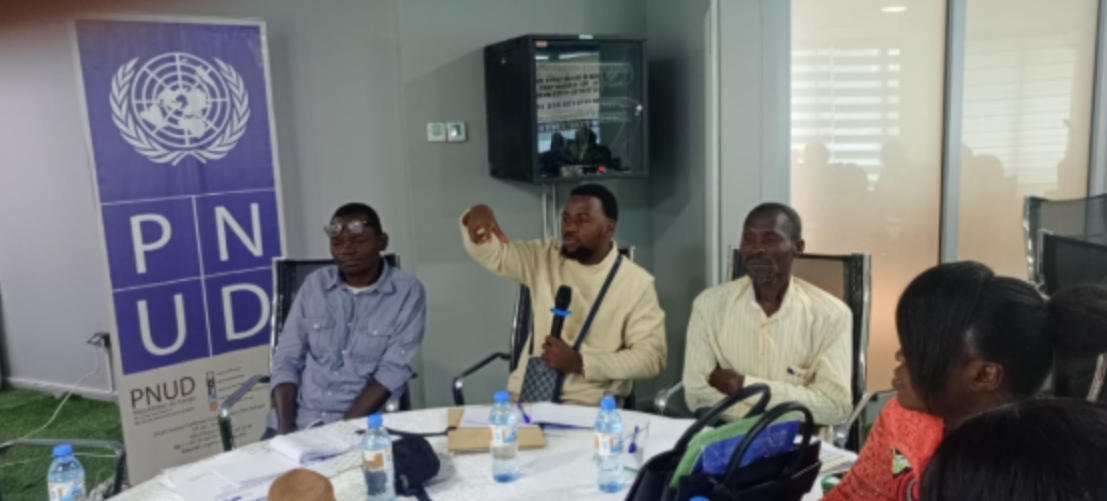
Training on Business Development for Small-Scale Mining
Brazzaville, Republic of Congo
In October 2024, the ACP-EU Development Minerals Programme conducted a training in Brazzaville for artisanal and small-scale miners. The training aimed to strengthen participants’ entrepreneurial and management skills, introduce business planning as a practical decision-making tool, and promote more inclusive and sustainable mining practices.
The workshop provided participants with knowledge on key aspects of managing and developing small-scale mining enterprises. Sessions addressed topics such as business planning, access to finance, marketing strategies, the creation and management of business entities and cooperatives, as well as basic accounting principles necessary for running a mining-related business.
The training was supported by practical case studies and interactive discussions that encouraged peer learning and the exchange of experiences among participants. These exchanges helped identify practical solutions and led to recommendations for improving the management and performance of small-scale mining enterprises.
As a result, participants gained practical knowledge and skills to better organize, formalize, and sustain their mining activities. This contributes to improving the productivity and income-generating potential of artisanal and small-scale mining businesses.
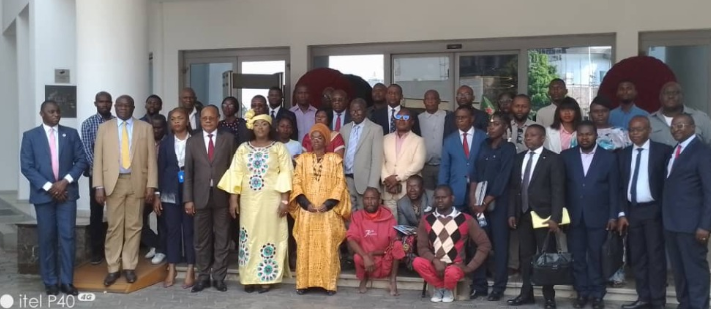
Awareness-Raising Workshop on Formalization of Artisanal and Small-Scale Mining (ASM)
Brazzaville, Republic of Congo
The Programme raised awareness and trained artisanal and small-scale mining (ASM) cooperatives on the formalization process in the Republic of Congo. These activities aimed to support the structuring of artisanal mining operations and promote practices that are more legal, safer, and environmentally sustainable.
The awareness-raising workshop provided information on the benefits of formalization and explained the administrative and legal procedures required for cooperatives to formalize their activities. It also introduced participants to responsible mining practices and discussed opportunities to improve access to finance and markets for artisanal miners.
The workshop combined coaching sessions, hands-on training, and practical exercises to strengthen participants’ understanding of these topics. In total, twenty-five artisanal and small-scale mining cooperatives participated in the training and benefited from the learning sessions.
As a result, participants improved their understanding of the formalization process and workplace safety. This contributes to the promotion of responsible mining practices and supports improved legal compliance among ASM operators in the Development Minerals sector.
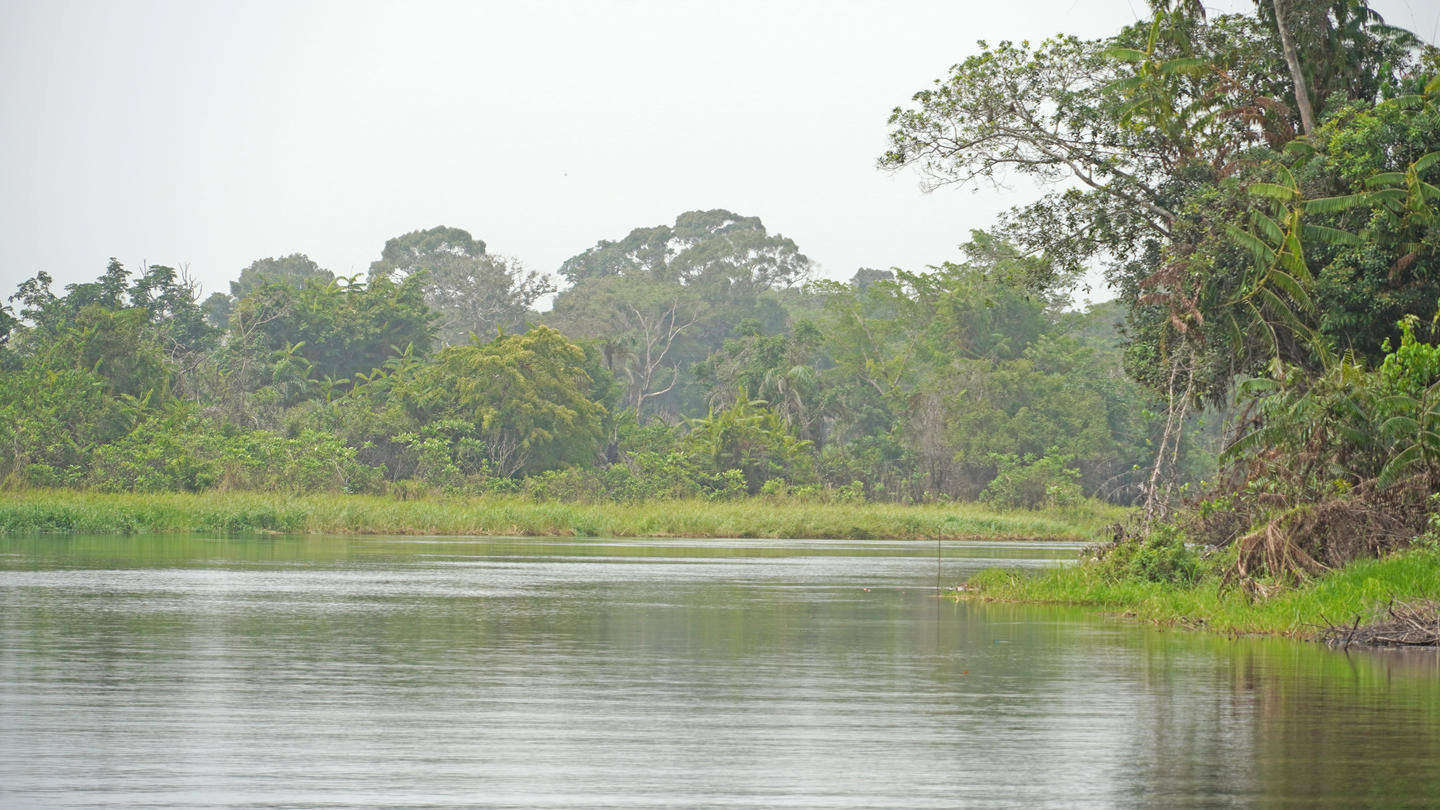
Le Congo et le PNUD s’engagent à intensifier leurs efforts dans la lutte contre le changement climatique
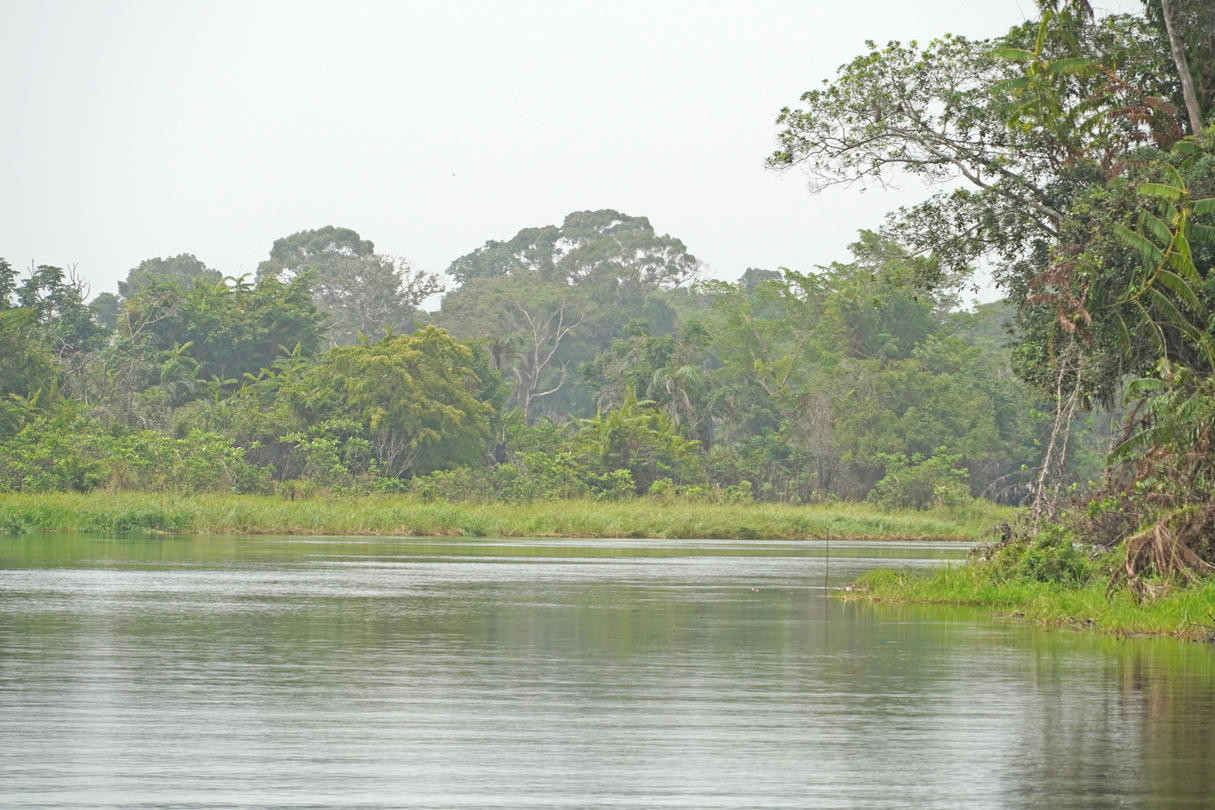
La République du Congo réaffirme son engagement en faveur de la lutte contre le changement climatique, alors que le pays fait face à la dégradation de son environnement. Lors du Sommet de la COP28, les nations africaines ont appelé les pays développés à honorer leur engagement de financer intégralement les efforts d’atténuation sur le continent. La République du Congo et d’autres pays de la région se sont positionnés comme des acteurs clés dans la lutte mondiale contre le changement climatique, soulignant l’importance de l’octroi de financements adéquats pour soutenir leurs efforts.
En absorbant d’importantes quantités de dioxyde de carbone chaque année, la forêt tropicale du bassin du Congo constitue le deuxième puit de carbone au monde et joue un rôle primordial dans la régulation du climat Cette forêt, encore appelée “poumon d’Afrique”, est menacée, notamment par la déforestation, la dégradation de l’environnement et les effets du changement climatique.
Face à ses menaces sur le climat et la biodiversité, le gouvernement congolais et le PNUD se sont associés pour organiser une série de sessions de renforcement de capacités et de partage d’expériences, afin de relever certains défis comme ceux rencontrés dans les domaines de l’exploitation des minéraux de développement et de l’aménagement du territoire du Congo.
Une telle session s’est tenue du 25 janvier au 1er février 2024 sur le thème de la formalisation, de l’environnement, de la santé et de la sécurité dans le secteur des minéraux de développement en République du Congo, pour parvenir à un secteur minier durable et inclusif. Cette réunion a servi de plateforme pour un échange fructueux entre des représentants gouvernementaux, des experts internationaux, des acteurs du secteur privé et des membres de la société civile.
Lors de cette session, il s’est agi de la reconnaissance du potentiel des minéraux de développement négligés, souvent sous-estimés, mais essentiels au développement économique local, ainsi que de l’importance de la formalisation pour assurer la légalité et la transparence dans l’exploitation minière, tout en garantissant la protection de l’environnement et la sécurité des travailleurs favorisant ainsi l’investissement et la croissance du secteur minier.
Parallèlement, la deuxième session du secrétariat technique permanent du Comité interministériel d’aménagement et de développement du territoire, qui s’est déroulée du 07 au 10 mars 2024 à Brazzaville, a marqué une avancée dans la planification spatiale et la gestion des ressources territoriales du Congo dans un souci de développement durable. Les recommandations formulées lors de ces travaux ont permis la mise en place d’une feuille de route pour une gestion plus efficace et équitable du territoire congolais.
L’engagement du gouvernement congolais en faveur d’une exploitation responsable des ressources minérales et d’une planification territoriale équilibrée est une expérience qui va faciliter l’accès aux financements et la mise en œuvre de meilleures pratiques, renforçant ainsi la capacité du Congo à promouvoir un développement durable et inclusif.
This story was originally published by UNDP Congo on April 11, 2024.